
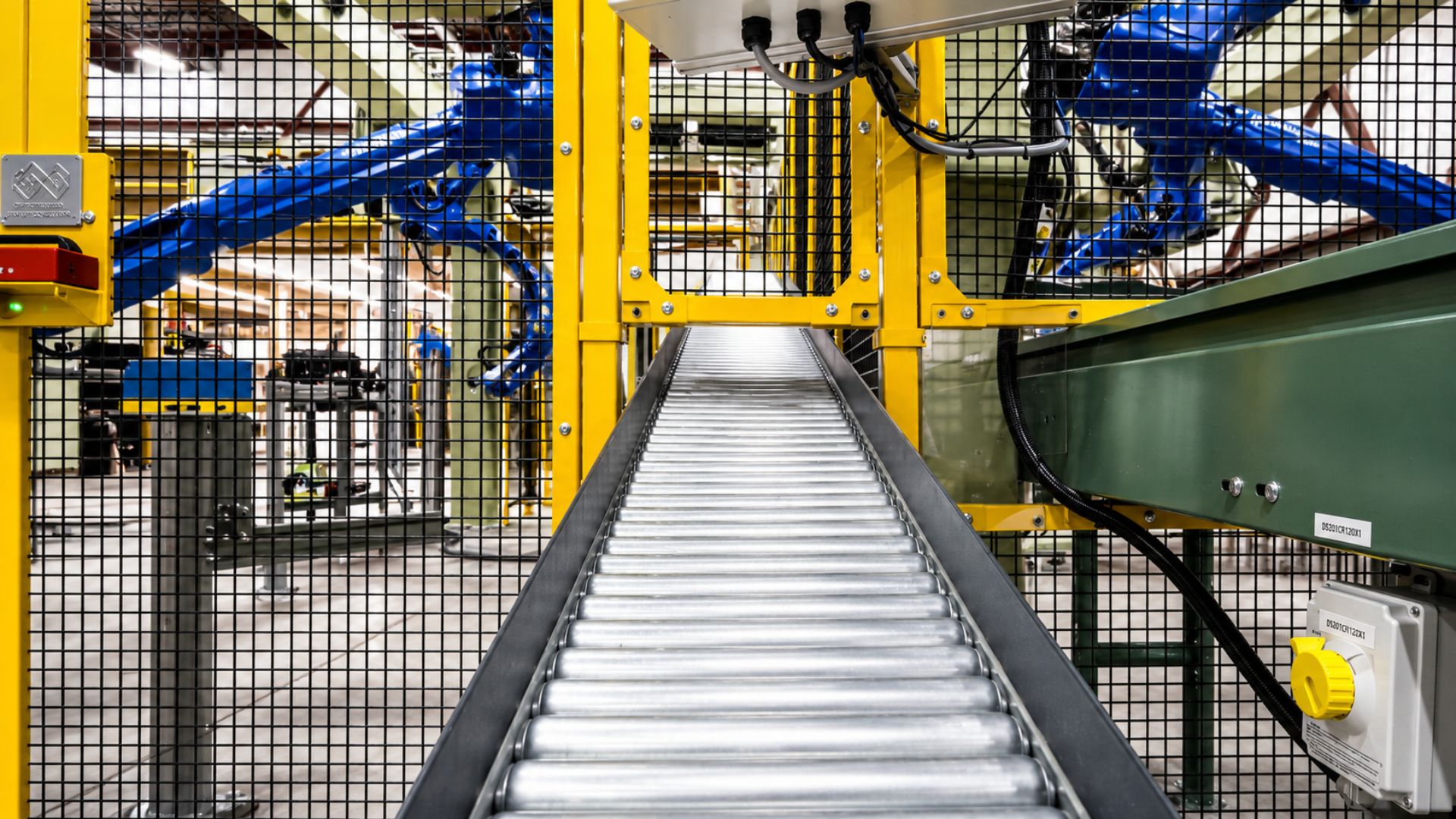
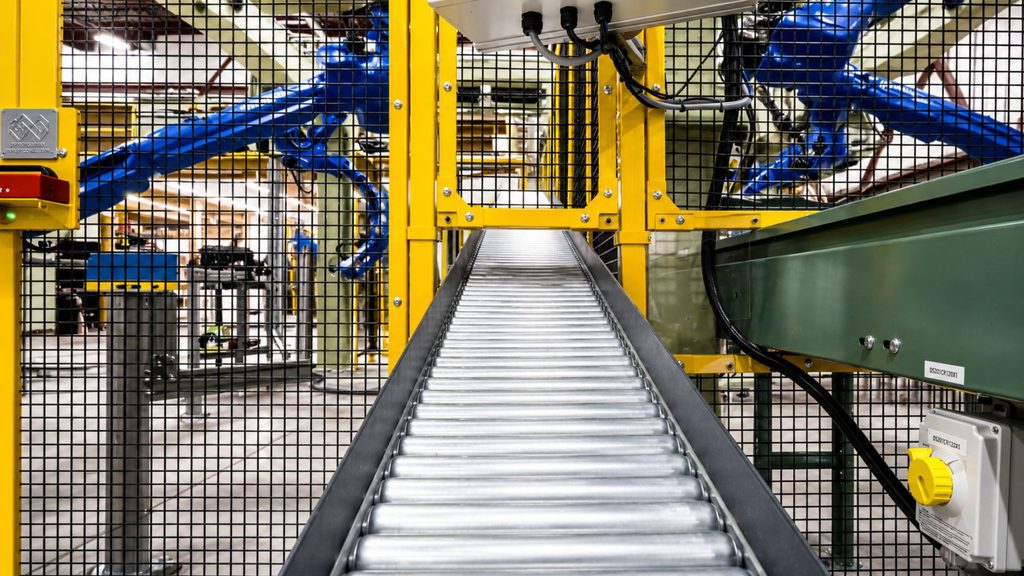
Robotic machine tending reduces the labour required at one stage of an existing automotive production process.
The situation
An automotive supplier relied on existing machines to cut, press and form components used in vehicle window assemblies.
The machines were doing their jobs, but moving parts through the process required significant handling. Operators loaded and unloaded each machine and transferred parts from one operation to the next. Maintaining production at the required pace meant dedicating multiple people to the process.
The customer saw an opportunity to reduce that labour requirement through automation, without replacing production equipment.
Black Controls was brought in to design a robotic material-handling system around the existing machines.
The opportunity
The new system had to work within the constraints of the existing equipment, layout and manufacturing process.
Black Controls used simulation and reach studies to determine the robot requirements for each part of the process, including payload, reach and positioning.
The customer needed to keep the existing equipment available for production, which meant much of the new system would have to be designed and tested away from the equipment it would eventually serve. On-site work would also need to be staged so the equipment could continue operating manually during the week, with the transition to automation completed during a planned shutdown.
The approach
The team started by modelling the proposed system. Using CAD data from the customer, Black Controls simulated the robotic cell to confirm the robots could reach each point in the process and evaluate cycle time. The layout could then be adjusted before the physical system was built.
From there, Black Controls’ mechanical team designed the physical system around the existing equipment. A custom overhead structure was engineered around the required robot positions and the equipment already on the floor. It needed to be strong and rigid enough to support the robots while maintaining the repeatability required by the process.
Custom tooling allowed the robots to pick up and move the parts. The tooling had to be lightweight enough to work within the robots’ available capacity, handle multiple parts consistently and avoid marking the finished components.
The robotic cell was manufactured, assembled and programmed at Black Controls, with temporary fixtures standing in for the customer’s production equipment. This allowed the team to run and test the system before moving it to the customer’s facility.
Installation was staged around the customer’s production schedule. The robots and overhead structure were installed during available weekend downtime, keeping them out of the way while operators continued running the equipment manually during the week.
During a planned production shutdown, Black Controls completed the integration with the existing equipment and transitioned the process to automated operation. The team established the robots’ precise pick and drop positions and made the changes needed for the production machines and new automation to operate as a coordinated process.
With little room for extended downtime, the team continued to refine the system after startup during available production windows. That included optimizing cycle time, troubleshooting issues as they emerged in production and supporting the customer’s team as they learned to operate and recover the new system.
The outcome
The automated cell now moves parts between the production machines, with a single operator keeping the system supplied and reducing the labour required at this stage of production.
The customer has been able to automate this material-handling work without replacing existing production equipment.
Black Controls continues to support the customer’s team, refining system performance and helping operators respond when issues occur.
Have a process you’re considering for automation?
Talk to Black Controls about what’s possible.