
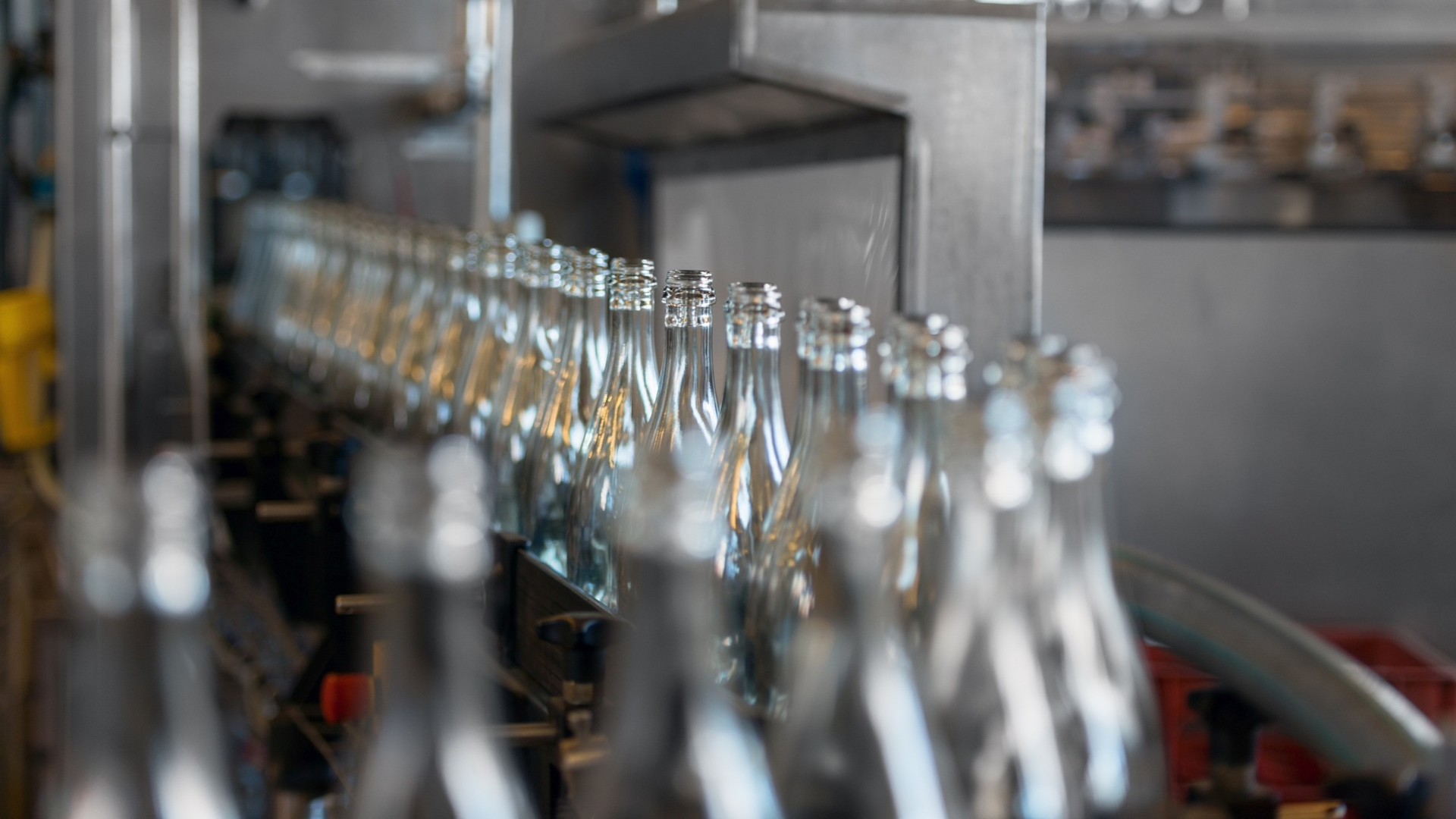
A standalone AI vision system brings consistent, high-speed quality inspection to an existing glass bottle production line.
The situation
If a defective bottle made it through inspection and was discovered after shipment, the customer could return the entire pallet. The manufacturer would then need to depalletize it, manually inspect the bottles and repalletize the acceptable product before shipping it again.
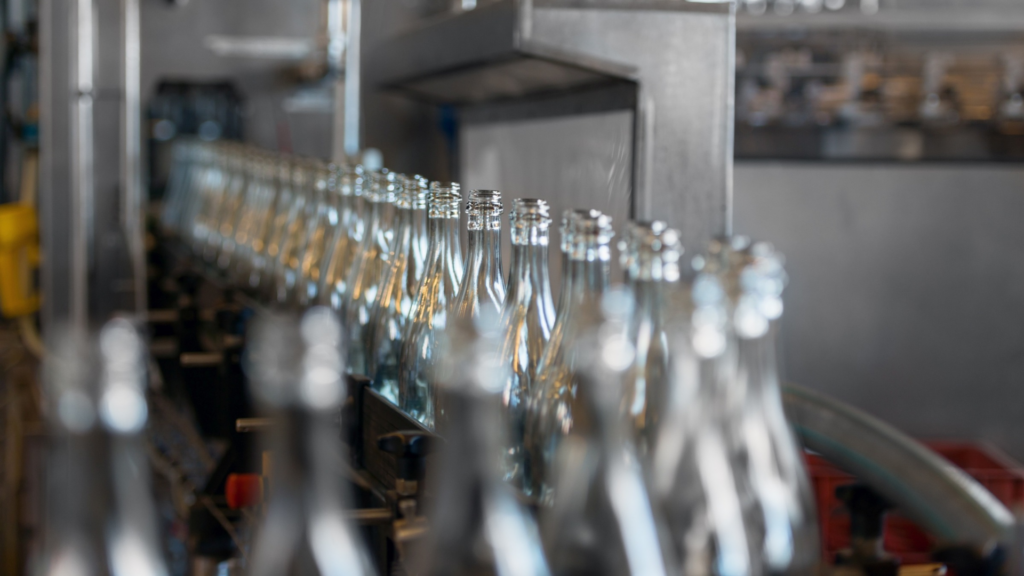
A glass bottle manufacturer needed a more consistent way to inspect painted labels on a high-speed production line. At roughly 140 bottles per minute, an operator monitored the line for defects and manually removed bottles that didn’t meet quality requirements. But painted labels naturally vary, requiring some judgement about what constitutes an acceptable label, and the speed of the line made it difficult to inspect every bottle consistently.
The opportunity
AI vision offered a way to make quality inspection more consistent without changing the production process itself. Unlike a conventional vision system looking for an exact match, an AI-based system could be trained to recognize acceptable variation in the painted labels while identifying defects that should be rejected.
The existing painting equipment was more than 30 years old and largely mechanical. Rather than trying to modify or replace it, Black Controls could build the inspection system to operate independently alongside the existing line.
The approach
The Black Controls team designed a standalone inspection system that could be added to the existing line without modifying its existing controls. Two Keyence VS-Series AI vision cameras inspect each bottle as it moves through production, one capturing the front label and the other the back.
Because the mechanical line speeds up and slows down, an encoder measures conveyor speed so the control system can track each bottle from inspection to the reject point. Bottles that fail the front or back label inspection are removed from the line with a blast of air. The entire inspection and rejection process is contact-free, with no need to physically handle the product.
The team began with sample defects provided by the bottle manufacturer, then installed and tested the system on site. The physical installation required only limited downtime while the team worked inside the guarded areas. Once the cameras had demonstrated they could detect the required defects, training continued while the line was running, allowing the AI model to learn the range of acceptable label variation under actual production conditions. The customer’s maintenance team was also trained to update the model as new scenarios arise.
The outcome
The system now provides consistent inspection of every bottle without slowing the production line. Defective labels can be caught before bottles are palletized and shipped, reducing the risk of rejected shipments and the manual reinspection that follows.
The project also created a proven, repeatable approach to high-speed vision inspection. Because the system operates independently from the production equipment, future installations can start with an established design rather than being engineered from scratch. The modular system can then be adapted to the specific product, line and inspection requirements.
Have a production problem that could be solved with targeted automation?
Talk to Black Controls about the right approach.